logoburgerMenuIcon

C3RM - CodeChem’s Management System

ClientCodeChem (Internal)

.

Duration3+ years

.

IndustryEnterprise Software

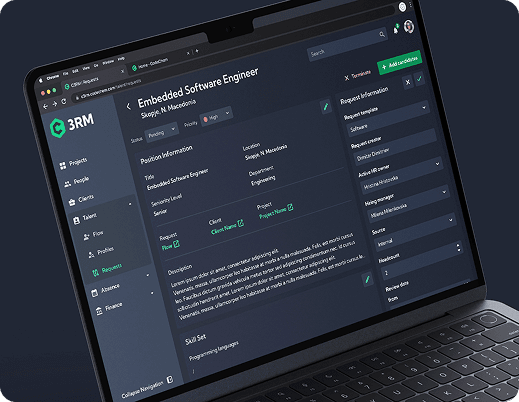
From an Excel sheet to a multi-module web application, C3RM is our own ever-growing resource management system, designed and developed to meet the specific needs of our team. As the platform matured, it laid the groundwork for building our own design system, which ensures visual consistency, supports accessibility, and can scale across future products. What began as a tool to optimise our internal operations is slowly evolving into a robust, modular solution for other companies facing similar challenges.

Technology Logo 1

Figma

Technology Logo 2

.NET

Technology Logo 3

Entity Framework Core

Technology Logo 4

C#

Technology Logo 5

PostgreSQL

Technology Logo 6

Node.js

Technology Logo 7

Strapi

Technology Logo 8

React

Technology Logo 9

TypeScript

Technology Logo 10

Formik

Technology Logo 11

Yup

Technology Logo 12

Chakra UI

Technology Logo 13

Docker

Technology Logo 14

GitLab CI/CD

Challenge

Like many growing companies, CodeChem began with people, projects, and client work managed in Excel spreadsheets. But as the business expanded, the need for a centralized system became unavoidable. Off-the-shelf CRM and HRM software options were either too complex and bloated or didn’t fully match our needs. Instead of juggling multiple platforms or dealing with enterprise tools built for much larger organizations, we chose to find a sweet spot in the middle by building a custom solution tailored to how we work.


We also set a long-term goal: once the system reached a reliable and mature state, we would refine it into a product for other medium to large businesses facing similar challenges.

Section Image

Solution

We designed and developed a modular system, where different business functions are structured into standalone modules. Each module works independently but is interconnected through shared data sets and relationships.


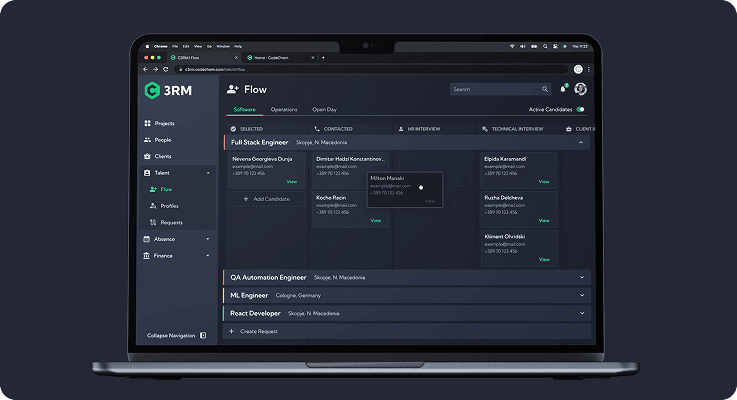
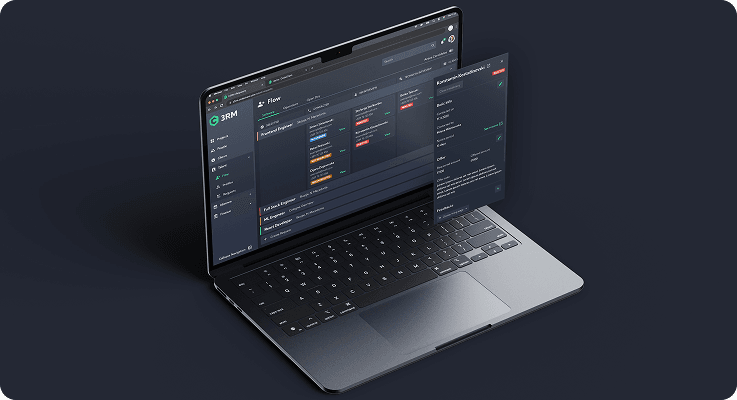
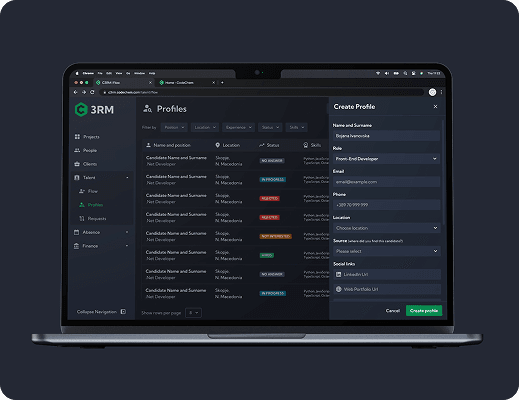
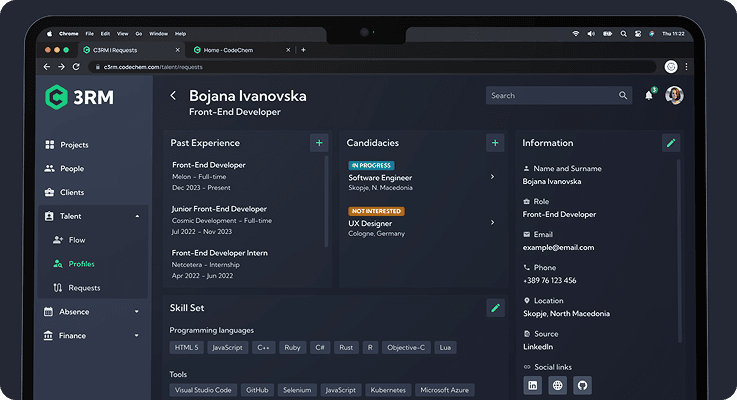
To illustrate: the Talent module is where open roles are created, candidates are sourced and profiled, and guided through the recruitment stages. Once hired, their profiles move to the People module, where they’re assigned to a team (or cell) and linked to projects via the Projects module.

The Clients and Projects modules handle active, completed, and planned work, with some clients having multiple projects at once.

Employees use the Absence module to request and manage time off. The Finance module tracks all company expenses, while the Inventory module, still in development, will help manage physical assets.


Access to each module is role-based and configurable.
Clients can adopt modules individually or use them as a fully integrated system.


The modular design also allows the platform to grow. New capabilities can be added without disrupting the core.

Section Image

Our Approach

This wasn’t just a technical project. It was a live system we used every day, which gave us the chance to test new technologies and improve in real time. We worked closely with specialised roles like recruiters, account managers, and office staff, as well as the wider team, to understand their daily routines and challenges.


We gathered requirements, translated them into designs, validated ideas with users, developed the features, and continuously refined them through direct feedback. From the beginning, there was a shared understanding that the system wouldn’t be perfect at launch. Instead, we aimed for steady progress, releasing in small, usable increments and improving with each iteration.


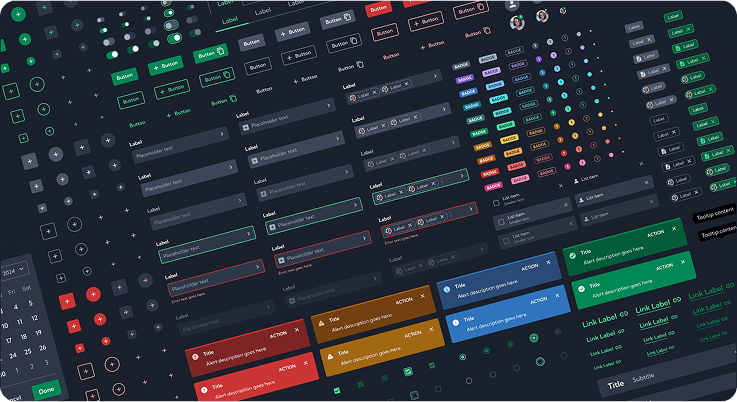
The platform’s growth and progression laid a solid groundwork to start developing our own design system. It's a work in progress that evolves alongside the product, shaped by real needs as they emerge. The system helps ensure visual and functional consistency across all modules, simplifies decision-making, and speeds up design and development. It's branded with our own colours and typography, and designed with flexibility in mind so it can be reused across future products as well.


Accessibility has been an important consideration from the start. The components are built with WCAG guidelines in mind, including proper colour contrast and keyboard navigation support, making the platform usable by a wider range of people.

Carousel Image
Carousel Image
Carousel Image
Carousel Image